
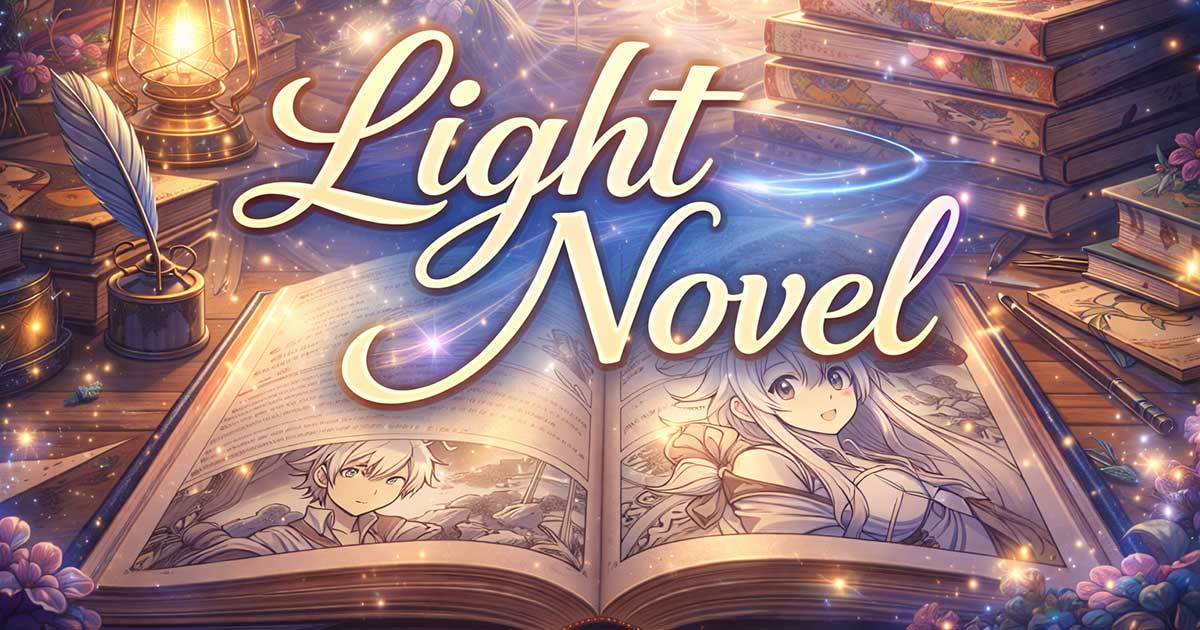
What Is a Light Novel?
A light novel is a style of Japanese novel primarily aimed at young adult readers. While the term “light” may suggest simplicity, it does not refer to shallow storytelling. Instead, it describes a format characterized by accessible prose, relatively short volumes, serialized publication, and the inclusion of manga-style illustrations.
Light novels typically range between 40,000 and 60,000 words per volume. They are often released in series format, with recurring characters and long-term narrative arcs. Unlike traditional Western novels, light novels frequently blend textual storytelling with visual elements, creating a hybrid reading experience that sits between prose fiction and graphic novels.
Although they originated in Japan, light novels have grown into a global publishing phenomenon, influencing anime, manga, web fiction, and even Western fantasy writing.
The Origins of Light Novels in Japan
The modern light novel format emerged during the 1970s and 1980s. Publishers began releasing youth-oriented paperback fiction that combined dynamic storytelling with illustrations inspired by manga aesthetics.
Early light novels often featured science fiction and fantasy themes. Over time, publishers formalized the format:
- Compact paperback size
- Serialized publication
- Distinctive cover art
- Black-and-white internal illustrations
- Targeted demographic categories (shōnen, shōjo, seinen)
By the 2000s, light novels became closely connected to anime adaptations. Successful series often transitioned into manga, anime, and video games, creating multimedia franchises.
Today, light novels represent one of the most influential sectors of Japanese pop culture publishing.
How Light Novels Differ from Traditional Novels
Light novels are not simply “short books.” They follow specific stylistic and structural conventions.
1. Accessible Language
Light novels prioritize readability. Sentences tend to be direct, dialogue-driven, and immersive. Internal monologue is common, and narrative pacing is generally fast.
This does not mean they lack complexity. Many light novels explore political systems, philosophical themes, and layered worldbuilding—but they do so in an approachable way.
2. Serialized Structure
Most light novels are part of long-running series. Instead of resolving everything in one volume, authors build:
- Character progression arcs
- Expanding world lore
- Escalating stakes across volumes
Readers return not just for plot resolution, but for character development and evolving relationships.
3. Illustrations as Narrative Enhancers
Unlike Western fantasy novels, light novels integrate illustrations at key emotional or dramatic moments. These images reinforce tone, character design, and iconic scenes.
The illustrations are not decorative; they are structural anchors that strengthen reader immersion.
4. Character-Centric Storytelling
While epic worldbuilding exists, light novels usually emphasize:
- Character growth
- Emotional tension
- Interpersonal dynamics
- Humor blended with drama
The protagonist’s perspective often dominates the narrative.
The Rise of the Isekai Genre
One of the most influential subgenres within light novels is isekai, meaning “another world.”
Isekai stories typically involve a protagonist who is transported, reincarnated, or summoned into a parallel world. While the concept has roots in earlier Japanese storytelling traditions, it exploded in popularity during the 2010s.
Common isekai elements include:
- RPG-inspired magic systems
- Leveling mechanics
- Guild structures
- Political kingdoms
- Power progression arcs
However, modern isekai has evolved beyond simple power fantasies. Many contemporary series explore responsibility, identity, trauma, leadership, and moral ambiguity.
Isekai’s popularity significantly contributed to the international spread of light novels.
From Web Novel to Light Novel
A unique aspect of modern light novel publishing is its connection to web fiction platforms.
Many successful light novels began as web novels published on Japanese sites where amateur authors serialized their stories online. If a web novel gained enough popularity, publishers would acquire it, revise it, and release it as an official light novel.
The transition typically includes:
- Professional editing
- Structural tightening
- Expanded worldbuilding
- Official illustrations
This web-to-print pipeline reshaped publishing by allowing audience validation before formal release.
Power Systems and Structured Worldbuilding
Light novels are known for structured power systems, especially within fantasy and isekai genres.
These systems often include:
- Mana or magical energy
- Skill trees
- Stat-based abilities
- Inherited powers
- Unique class systems
Unlike soft-magic systems in Western fantasy, light novel power systems frequently operate under visible rules. Readers can track progression logically, which creates narrative satisfaction.
However, strong light novel writing balances structure with emotional stakes. Numbers alone do not carry a story—conflict and character motivation do.
Character Archetypes in Light Novels
Light novels frequently employ recognizable archetypes, but successful stories deepen them.
Common archetypes include:
- The underestimated protagonist
- The stoic rival
- The loyal companion
- The mysterious mentor
- The morally ambiguous antagonist
Over time, many series subvert these archetypes by revealing psychological complexity beneath familiar roles.
Themes Beyond Action
Although action-heavy series dominate visibility, light novels explore diverse themes:
- Political intrigue
- Romance
- Psychological trauma
- Social hierarchy
- Ethical dilemmas
- Existential reflection
The format allows authors to blend humor and seriousness fluidly. Light novels can shift from comedic dialogue to dramatic confrontation within the same chapter.
Light Novels and Global Influence
Over the past decade, light novels have expanded far beyond Japan.
International publishers now license translations regularly. Western authors have also adopted light novel-inspired structures, including:
- Shorter serialized volumes
- Anime-inspired character archetypes
- Clear progression systems
- Dialogue-driven pacing
Digital platforms have further accelerated this globalization. Readers can discover series through streaming anime adaptations, online communities, and digital bookstores.
Light novels have become a bridge between traditional publishing and internet-native storytelling.
Why Light Novels Continue to Grow
Several factors explain their sustained popularity:
1. Accessibility
The prose style lowers the barrier to entry for younger readers and new fantasy fans.
2. Strong Emotional Hooks
Light novels invest heavily in character attachment. Readers often follow series for years because of emotional continuity.
3. Adaptation Potential
The structure naturally lends itself to anime and manga adaptations, increasing visibility.
4. Digital Distribution
Ebooks and online communities have expanded the audience globally.
The Evolution of Modern Light Novel Writing
Contemporary light novels show increasing sophistication.
Recent trends include:
- Complex political arcs
- Multi-perspective storytelling
- Deconstruction of overpowered tropes
- Darker moral conflicts
- Nuanced antagonists
As the audience matures, so does the storytelling depth.
Are Light Novels Only for Teen Readers?
While traditionally targeted at young adults, light novels are read by a broad demographic today.
Many adult readers appreciate:
- Structured fantasy systems
- Efficient pacing
- Character-driven arcs
- Serialized long-form storytelling
The format’s flexibility allows it to scale in complexity.
Light Novels vs. Western Fantasy
Although there are overlaps, key differences remain:
| Light Novels | Western Fantasy |
|---|---|
| Short serialized volumes | Long epic tomes |
| Frequent illustrations | Rare illustrations |
| Fast pacing | Slower buildup |
| Character POV dominant | Expansive multi-POV common |
| Clear progression systems | Often softer magic systems |
Both forms offer rich storytelling, but their structural philosophies differ.
The Future of Light Novels
Light novels are unlikely to remain confined to a single cultural sphere.
As digital platforms grow and storytelling formats evolve, the boundary between web fiction, serialized novels, and multimedia franchises continues to blur.
We may see:
- More international authors adopting the format
- Hybrid publishing models
- Interactive digital adaptations
- Expanded global readership
Light novels are no longer niche—they are a defining format of modern genre fiction.
Conclusion
Light novels represent a dynamic fusion of prose storytelling, serialized structure, and visual reinforcement. Originating in Japan, they have grown into a global literary force influencing fantasy writing, anime production, and digital publishing.
Whether exploring parallel worlds, political intrigue, or emotional growth, light novels offer an accessible yet flexible framework for immersive storytelling.
As publishing continues to evolve, light novels stand at the crossroads of tradition and innovation—bridging cultures, mediums, and generations of readers.
Version française complète de cet article sur le light novel